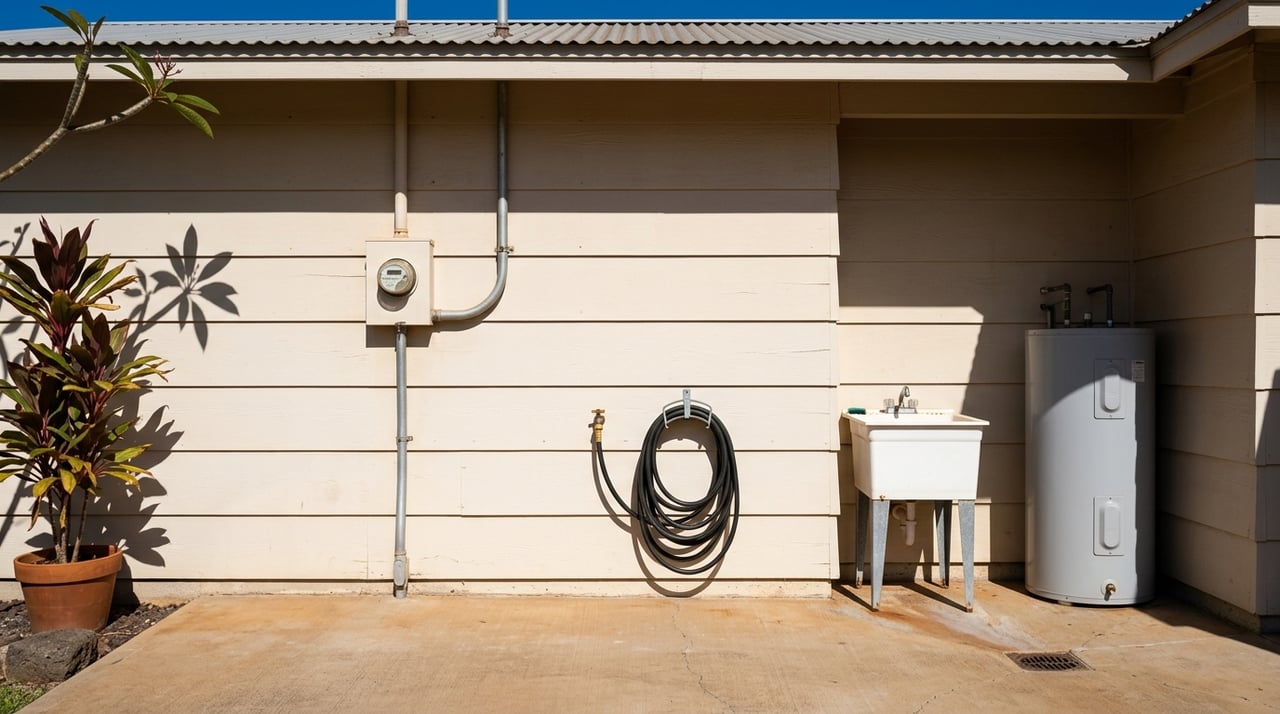
Lanai City Cost of Living and Daily Expenses
June 4, 2026
June 4, 2026
Wondering what it really costs to live day to day in Lānaʻi City? That is one of the smartest questions you can ask if you are planning a move, budgeting for a home, or comparing island living with life elsewhere. The good news is that Lānaʻi City’s expenses are fairly easy to understand once you break them into fixed bills, usage-based costs, and travel-related expenses. Let’s dive in.
In Lānaʻi City, everyday expenses are less about one big “cost of living” number and more about a pattern of recurring bills. Your budget will usually include electricity, water, sewer, and refuse service, with transportation adding another layer when you need to travel off-island.
That matters because some costs stay fairly predictable, while others change based on how much you use or how often you travel. If you own a home with an additional dwelling unit, that can also affect what you pay.
Electricity is one of the clearest examples of a usage-based expense. Hawaiian Electric notes that power in Hawaiʻi is generally more expensive than on the mainland because each island operates an independent grid and the state’s remote location adds cost.
For Lānaʻi Division residential Schedule R, the current monthly customer charge for single-phase service is $13.36. After that, your bill depends on how many kilowatt-hours you use.
Here is the current residential energy charge structure for Lānaʻi:
| Usage tier | Rate |
|---|---|
| First 250 kWh | 45.8528¢ per kWh |
| Next 500 kWh | 48.7571¢ per kWh |
| Over 750 kWh | 49.5703¢ per kWh |
In practical terms, that means daily habits matter. Air conditioning, appliance use, and overall household size can all affect where your bill lands each month.
Water and sewer are also key parts of a Lānaʻi City household budget. Maui County’s FY2026 schedule shows that water charges begin at $2.13 per 1,000 gallons for the first 5,000 gallons on a single-family account.
For a standard 5/8-inch meter, the regular monthly water service charge is $28.81. So even before usage is added, you should plan for that base monthly service amount.
Sewer charges are billed monthly with the water bill. The standard residential sewer charge is $51 per dwelling unit per month plus $4.60 per 1,000 gallons.
For homes in areas not operated by the county water system, the county uses flat monthly sewer fees instead. Those are $72.50 for a single-family residence and $61.00 for multi-family.
Refuse service in Lānaʻi City is billed differently from monthly utilities. For FY2026, Lānaʻi residential refuse collection is $108 semi-annually.
The billing year runs from July 1, 2025 through June 30, 2026. The county allows payment annually or in two six-month increments, which can help with planning if you prefer to spread out costs.
There are also a few details that are easy to overlook. Missed payments can lead to a $50 account re-opening fee, and a lost or damaged refuse cart costs $105 to replace.
The county also notes that Lānaʻi has no refuse cashier, so payments are currently made at the Lānaʻi DMV. That is a small detail, but it is the kind of local logistics point that can help you avoid surprises.
Not every home has the same service profile. If a property includes a cottage or ohana unit, Maui County bills it as two dwelling units for sewer purposes.
That means a home with an additional unit can carry higher recurring charges than a single dwelling alone. The county also says an extra refuse cart may require a separate account and additional fees.
If you are comparing homes, this is worth checking early. Two properties with similar sale prices may have different monthly carrying costs depending on how the property is set up.
Transportation is another part of daily life that can shape your budget in Lānaʻi City. While you may not travel off-island every day, ferry and air service often affect errands, appointments, and household planning.
Expeditions operates ferry service between Māʻalaea, Maui and Mānele, Lānaʻi. The current schedule shows three round trips per day, and the crossing takes about 1 hour 10 minutes.
Ferry pricing is not presented consistently across the company’s public materials. A 2024 press release lists adult fares at $40 to $66 and child or resident senior fares at $10 to $15, while some route pages show older pricing. The safest takeaway is that ferry costs are variable and should be checked live before booking.
Airfare is also variable. Mokulele currently lists Lānaʻi City as a destination and promotes 20% off base fares with code MEOW26, which shows that flight pricing can shift based on timing and promotions.
On Lānaʻi, travel costs are not just about the ticket price. Because ferry and air service run on schedules rather than on-demand service, off-island errands often take more planning.
That can influence how you budget time and money for appointments, contractor visits, replacement parts, or household purchases that are not available locally. Even when the direct fee looks manageable, the timing can add another layer to the real cost of getting things done.
For many buyers and owners, this is one of the biggest practical differences in island living. It is less about inconvenience and more about planning ahead.
Everyday expenses in Lānaʻi City also include ongoing home maintenance. Coastal conditions can lead to recurring upkeep needs that may not show up in a standard utility budget.
Federal guidance on coastal corrosion and Maui recovery guidance both point to the effect of salt spray, wind, and humidity on building materials. For homeowners, that can mean more frequent inspection or replacement of exposed metal components like flashing, vents, connectors, and fasteners.
Moisture control matters too. The University of Hawaiʻi CTAHR says termite management is largely about prevention and control, including reducing termite-friendly conditions, keeping water away from the home, avoiding direct wood-to-soil contact, and inspecting regularly.
In real life, that can translate into maintenance items like drainage fixes, paint or sealant renewal, pest control, and periodic moisture checks. These may not arrive as one neat monthly bill, but they are still part of the cost pattern of owning a home here.
If you are thinking about buying in Lānaʻi City, it helps to budget in categories rather than chase one all-in number. A practical framework includes:
This kind of budgeting gives you a more accurate picture of ownership. It also makes it easier to compare one property with another in a realistic way.
Lānaʻi City expenses are manageable when you understand how the pieces fit together. What often trips people up is not one major bill, but the combination of county fees, utility usage, property setup, and island logistics.
That is especially true for off-island buyers or owners managing a family property from afar. Having local guidance can make a real difference when you are trying to estimate carrying costs, understand utility patterns, or plan for property upkeep.
At Okamoto Realty, we believe good real estate advice should be practical and easy to use. If you want help understanding how a specific Lānaʻi City property may affect your day-to-day budget, talk with a local team that knows the island firsthand at Okamoto Realty LLC.
Stay up to date on the latest real estate trends.
We bring together a mix of integrity, imagination and an inexhaustible work ethic, striving to make each buying and selling experience the best possible.