Insuring a Plantation Home in Lānaʻi City: Risks Before Closing
August 13, 2026
August 13, 2026
In July 2025, a couple on Oʻahu named Michael and Marilee Lyons opened a letter from their insurer telling them their hurricane coverage would not be renewed. They had built their Haleʻiwa home in the late 1970s with redwood single-wall construction, a completely legal and common choice at the time. "We were permitted at that time. We followed all the rules," Marilee told Hawaii News Now. Nearly fifty years of premiums hadn't bought them any protection from the letter that arrived that summer.
The Lyons live on Oʻahu, not Lānaʻi. But the type of home they built is the same type that fills the older blocks of Lānaʻi City: single-wall, wood-frame, plantation-era. What happened to them is not a one-time story. It is the shape of a market shift that is already reaching this island, whether or not a single Lānaʻi policyholder has gotten a letter yet.
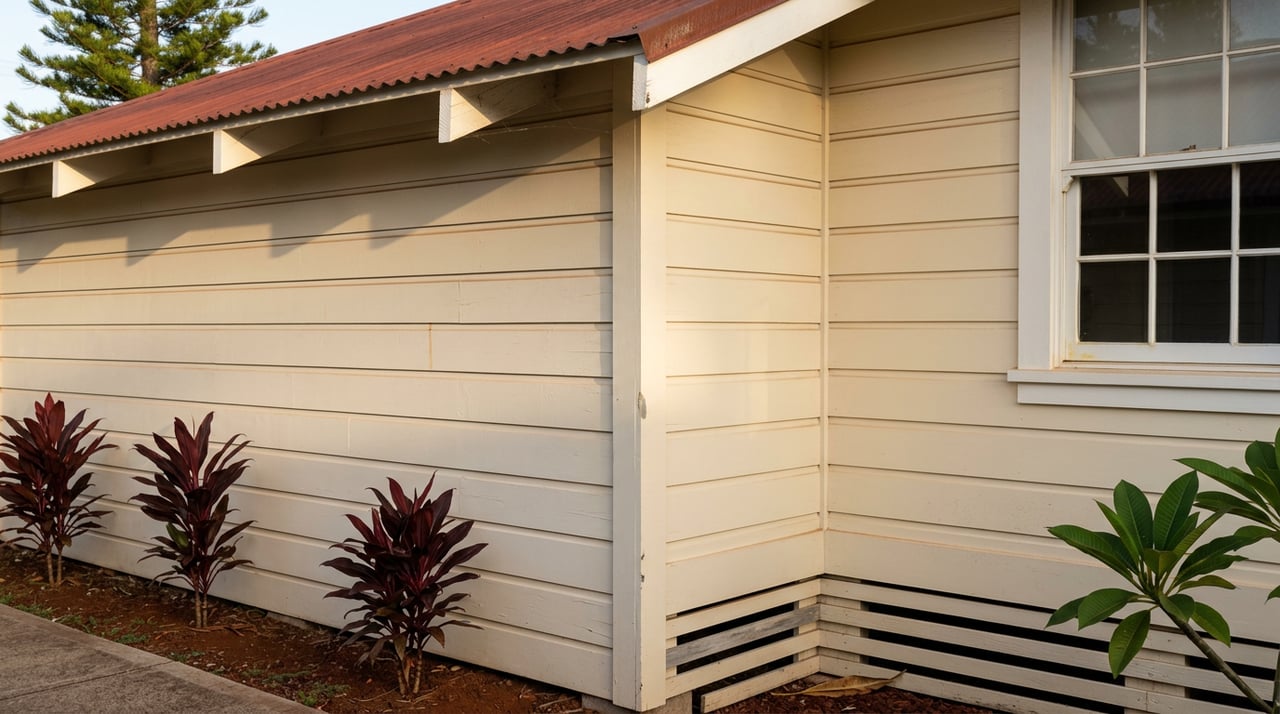
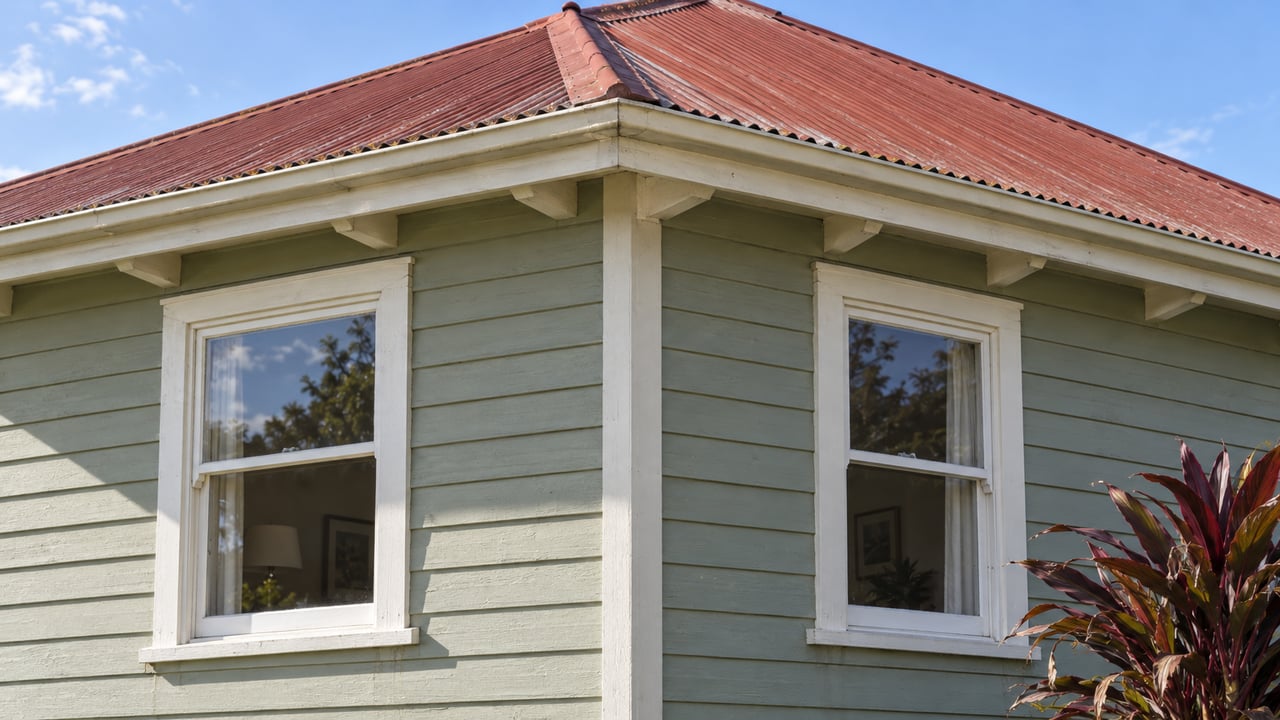
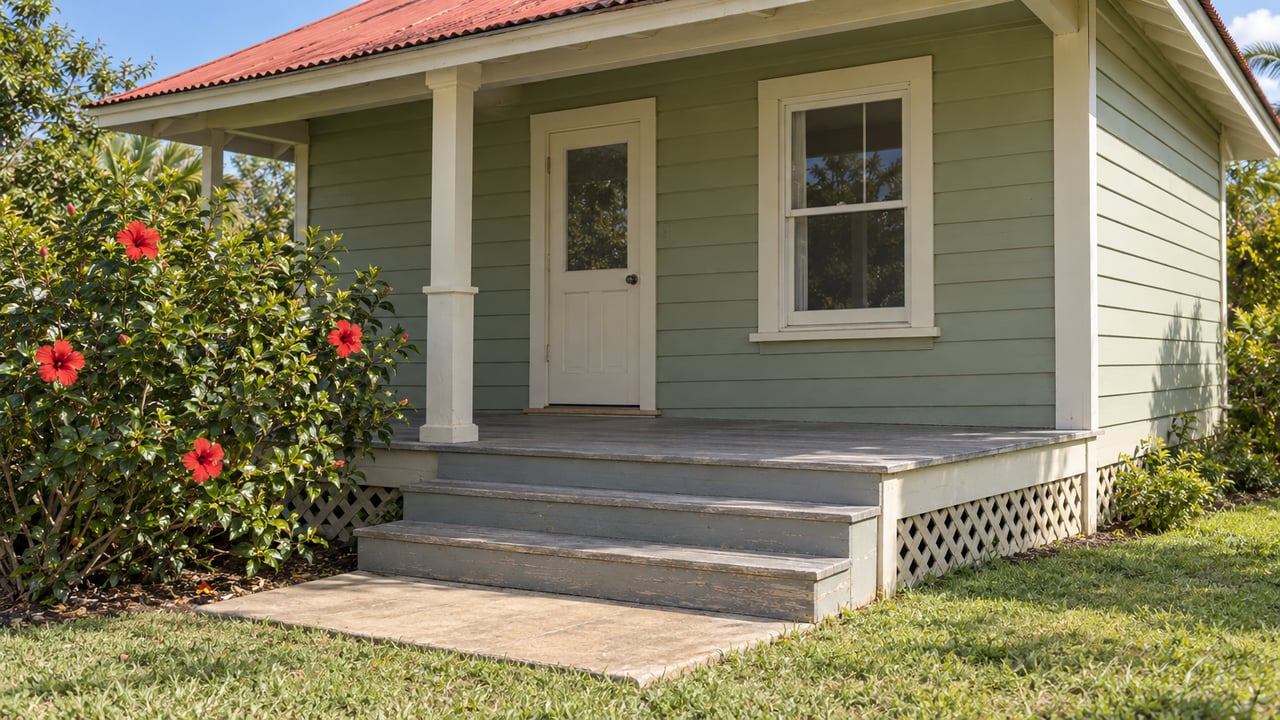
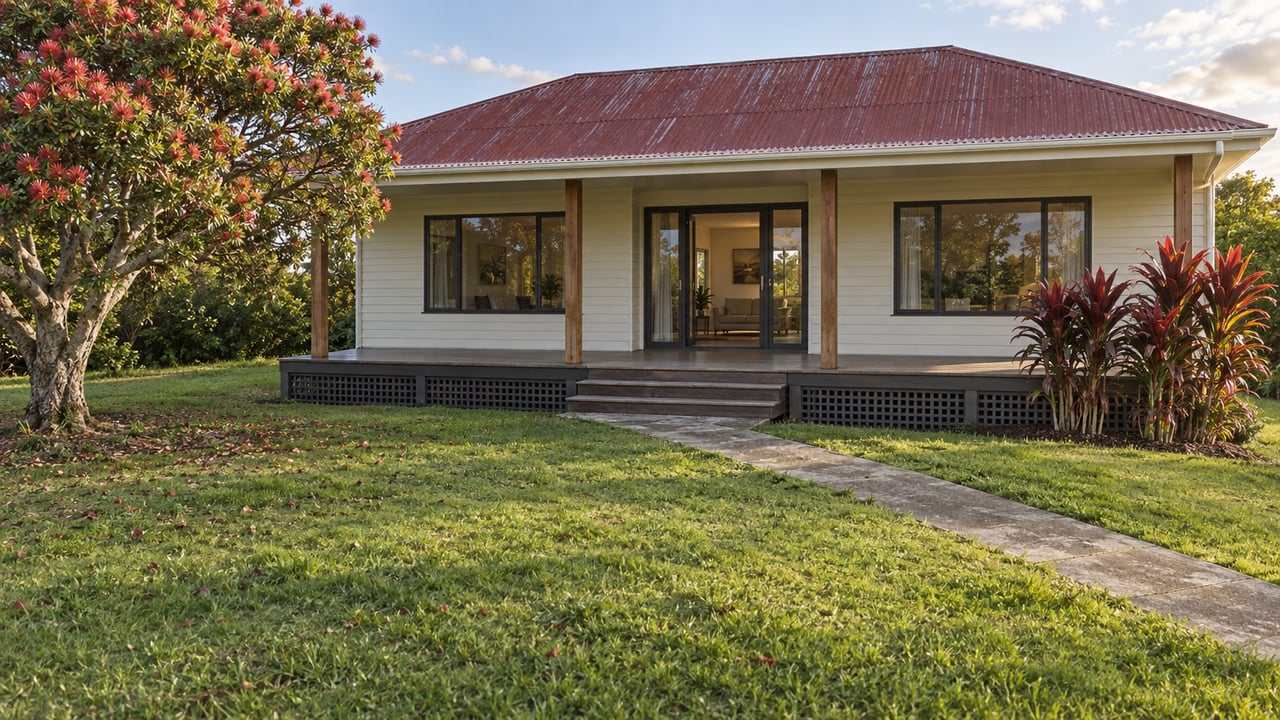
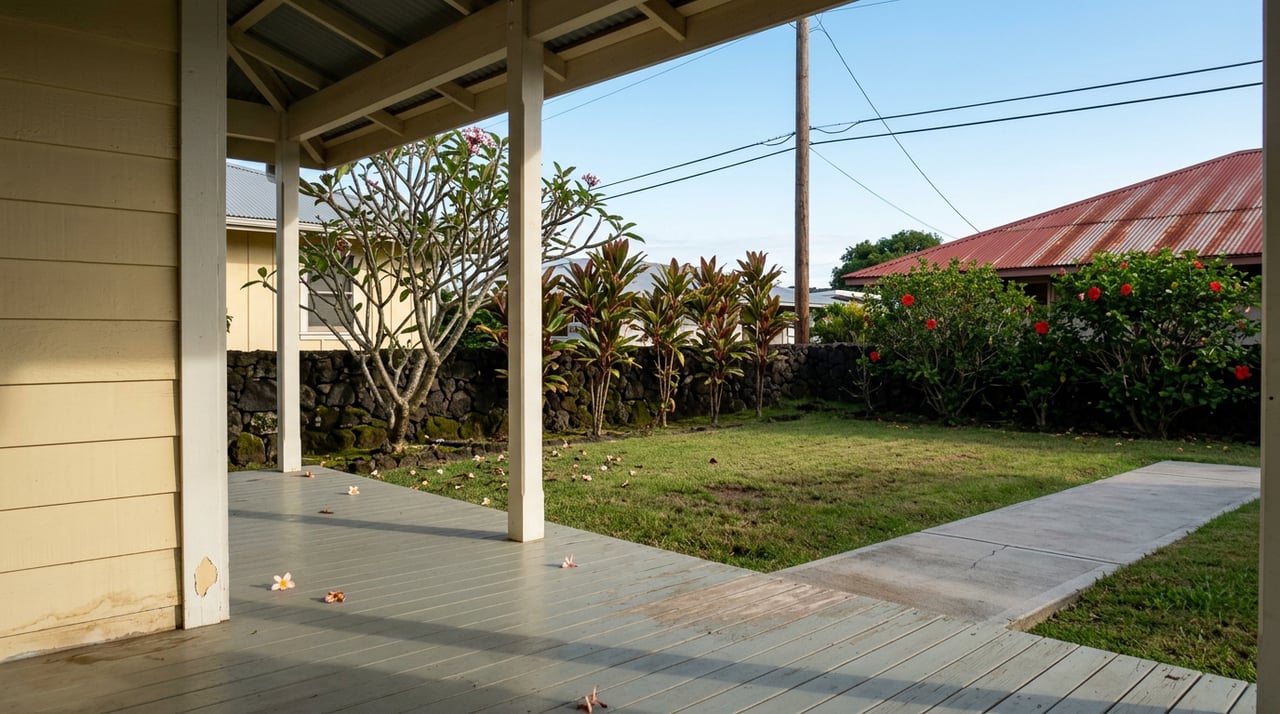
Lānaʻi City was built starting in the early 1900s as a company town for the pineapple plantation, and the housing stock still reflects it: modest single-story cottages, painted wood lap siding, tongue-and-groove board walls that do double duty as both structure and interior finish. Single-wall construction has no stud cavity and no space for insulation. It was fast, cheap, and well suited to the plantation-era building economy. It is also, in the eyes of today's insurers, a wind-resistance problem.
An insurance broker quoted in the same Hawaii News Now story put it plainly: "If a Category 3 hurricane were to hit a single-wall home, it's not likely to withstand that." That is not a statement about Lānaʻi in particular. It is a statement about a building method, and building method travels with the house, not the island.
The retreat is not coming from one company or one policy. Several carriers have made separate decisions that land on the same category of home.
| Carrier | Action | Reported |
|---|---|---|
| State Farm | Stopped renewing hurricane coverage on single-wall rental homes statewide, after earlier notices to single-wall owners generally | Hawaii News Now, May 2026 |
| DB Insurance | Canceled hurricane coverage for both single-wall and double-wall homes, while continuing to insure superior-frame and masonry construction | Hawaii Public Radio, July 2025 |
| Zephyr Insurance | Stopped writing new hurricane policies, but continues renewing existing ones | Hawaii Public Radio, July 2025 |
| Crum and Forster | Stopped writing any residential policies in Hawaiʻi | Hawaii Public Radio, July 2025 |
| DTRIC | Withdrew from the Hawaiʻi homeowners market entirely in late 2025, displacing roughly 20,000 policyholders | Reported late 2025 |
Read across that table and a pattern appears that has nothing to do with island, neighborhood, or price point. It is entirely about what the walls are made of.
This is the part that catches people off guard. The instinct in real estate is to think about insurance risk the way we think about everything else: location, location, location. Coastal exposure, flood zone, wildfire zone. Those factors matter, and Hawaiʻi's Department of Commerce and Consumer Affairs lists them plainly in its own consumer guidance, alongside construction and labor cost inflation as drivers of the statewide increases.
But construction type is now doing something distance from the ocean cannot. Hawaii Public Radio reported that State Farm has long declined to write new policies within a thousand feet of the ocean. Its newer decision on single-wall homes applies "no matter how far they are from the water." That is a different kind of underwriting line. It does not ask where your house sits. It asks what your house is built out of.
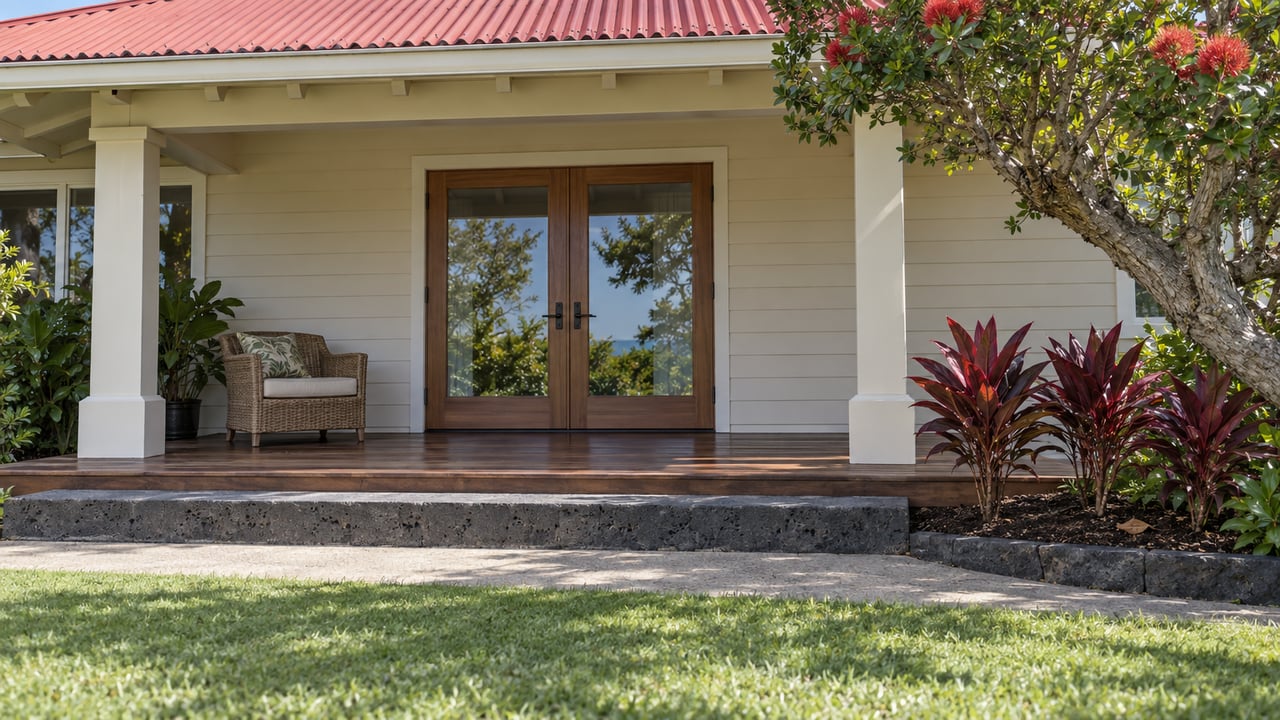
For Lānaʻi, that line falls unevenly across the island's two very different housing stocks. The newer construction near Koele, built in stucco over masonry base courses rather than single-wall wood, sits on the safer side of that line. The older cottages inside Lānaʻi City, many of them held by the same families for two and three generations, sit squarely on the other side.
"Those kinds of homes are at higher risk of sustaining damage. And that's a concern also for insurance companies." — Hawaiʻi Insurance Commissioner Scott Saiki, quoted by Hawaii News Now, May 2026
That is not a comment about Lānaʻi. It is a comment about exactly the kind of home Lānaʻi City is full of.
The standard real estate advice used to be to sort out insurance after an offer is accepted. That advice was built for a market where insurance was mostly a matter of price. In today's market, for a single-wall home, insurance can be a matter of availability, and availability is not something a buyer can negotiate their way around at the closing table.
A few adjustments are worth making before that stage arrives:
None of this changes the fundamentals of a home. It changes when in the transaction the insurance conversation happens, and for a plantation-era cottage, that timing now matters as much as the inspection report does.
Hawaiʻi lawmakers have not been silent on this. Act 296 reactivated the Hawaiʻi Hurricane Relief Fund, which began issuing coverage again on June 24, 2025, and has already written over $2 million in premiums for eligible condominiums, according to the DCCA's own homeowners insurance guidance. The same act expanded the powers of the Hawaiʻi Property Insurance Association to serve homeowners who cannot find coverage on the private market. Statewide, homeowners insurance rates rose an average of nearly 9% in 2025. That sits on top of a roughly 23% increase over the previous five years found by LendingTree and reported by Hawaii Public Radio, even though Hawaiʻi still carries the lowest average homeowners insurance rate in the country. None of that spending has reversed the underlying trend. It has cushioned it.
Is homeowners insurance legally required in Hawaiʻi? No. As noted above, a mortgage lender will require it for the life of the loan, which is what turns an insurance gap into a closing problem rather than a personal choice.
Does this affect homes near Koele the same way it affects Lānaʻi City? Not evenly. The underwriting pressure described here is tied to single-wall wood construction specifically. Newer stucco and masonry homes near the resort are generally built differently, though every buyer should confirm construction type and insurability for the specific property, not assume based on neighborhood alone.
What should I do if I already own a single-wall home and get a non-renewal notice? Shop multiple carriers immediately rather than letting the policy lapse, since a lapse can complicate finding new coverage. If the private market declines, the Hawaiʻi Property Insurance Association is a real, if costlier, fallback.
Insurance used to be paperwork you handled after the excitement of an accepted offer. For a lot of homes in Lānaʻi City today, it is closer to a condition of sale, and it rewards the seller or buyer who checks it early. If you are getting ready to list a family cottage, or you are looking at one from off island and want to understand what you are actually taking on, Okamoto Realty has spent decades helping Lānaʻi families move through exactly this kind of transaction with fewer surprises. Talk with a Lānaʻi real estate expert before you list or before you sign.
This article is general information, not legal, tax or financial advice. Consult a qualified professional about your situation.
Stay up to date on the latest real estate trends.
We bring together a mix of integrity, imagination and an inexhaustible work ethic, striving to make each buying and selling experience the best possible.