Kaumalapau Harbor Closure: Lessons for Lanai City's Supply Line
September 24, 2026
September 24, 2026
By the morning of September 9, the line outside Lanai City Service stretched past the deli window and around toward Lānaʻi Avenue. The island's only gas station had put a $50 cap on fuel purchases the day before, and residents were describing waits of up to two hours just to reach a pump. Down the street, shoppers were doing the same math at Richard's Market and Pine Isle Market, Lānaʻi City's two grocery stores, filling carts without knowing when the next delivery would land. The reason for all of it sat six miles away on the island's west side: Kaumālapaʻu Harbor, the only commercial harbor on Lānaʻi, had just been knocked out of commission by Hurricane Lowell.
What happened over the following ten days is worth understanding in more than headline form, because the closure did not stress every system on the island the same way. Some parts of daily life on Lānaʻi turned out to have real cushion built into them. One did not have any cushion at all. That distinction, not the storm itself, is the more useful thing to carry into the rest of this hurricane season.
Kaumālapaʻu Harbor was built in the 1920s, and it remains the single physical point through which nearly everything arriving on Lānaʻi by sea has to pass. When Lowell's storm surge hit on September 8, it dislodged six one-ton interlocking jacks that protect the harbor, pushing some into the ocean and snapping others outright. At least two shipping containers ended up in the water, with a third possibly joining them, and one was later found on the far side of the bay along with a downed telephone pole. On the road leading into the harbor, the surge opened a sinkhole roughly 70 feet wide and 15 feet deep.
The state Department of Transportation closed the harbor that same day and called it inoperable. Maui County Councilmember Gabe Johnson, who represents Lānaʻi, described watching one-ton concrete jacks get thrown around by waves he had never seen the equal of in years of living on the island. There was no second harbor to reroute to and no alternate dock nearby that could absorb the weekly barge. Kaumālapaʻu either worked or it didn't, and for over a week, it didn't.
The interesting part is what didn't break. Lānaʻi generates its own electricity on-island from diesel fuel, which means a barge delay could, in theory, threaten power. But Hawaiian Electric confirmed it had more than three weeks' worth of fuel already stored on the island, so the harbor's repair window never came close to putting the lights at risk. That's a meaningful margin, built in well before the storm, that simply wasn't matched anywhere else in the supply chain.
Fuel for vehicles told a tighter story. The island had roughly a 25-day supply of gas on hand at the moment the harbor closed, and the barge that normally restocks it arrives once a week, typically on Wednesdays, carrying 20 to 25 containers of goods and supplies. Twenty-five days of reserve against a repair estimate that shifted from "about a week" to "about two weeks" left some room, but not much, which is exactly why the $50 pump limit went into effect almost immediately rather than being treated as an overreaction.
A few numbers from that week are worth holding onto simply because they explain how tight the margins usually run:
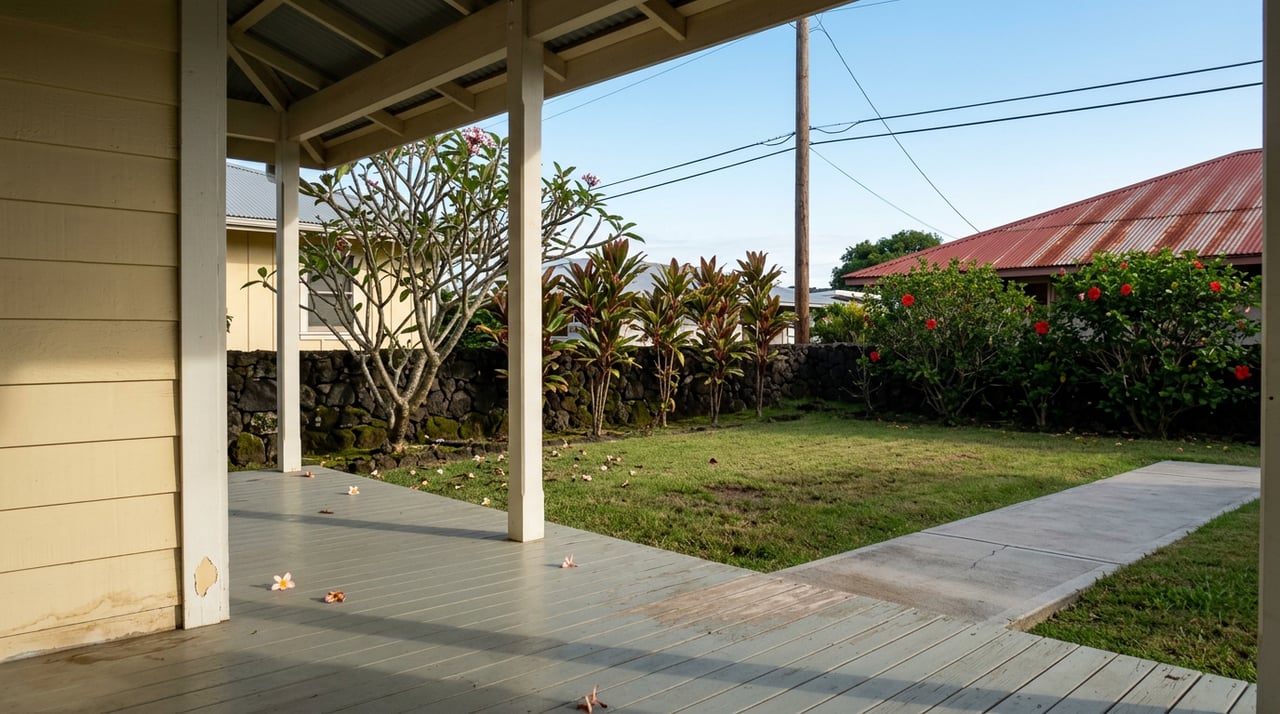
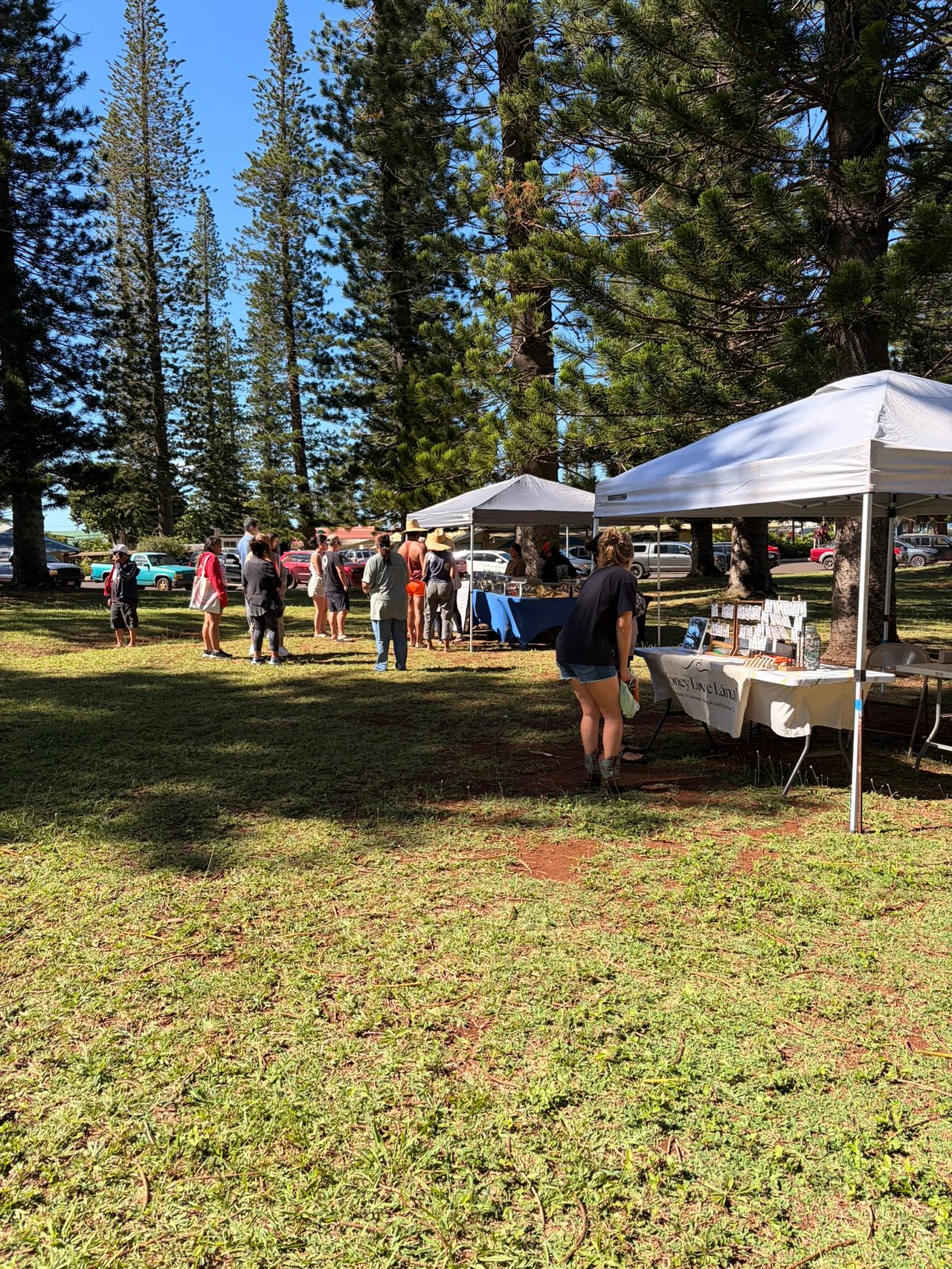
Councilmember Johnson's public message during the closure leaned on something structural about the town itself rather than on rationing alone. He reminded residents that Lānaʻi City is a walking town, and that choosing to walk instead of drive was one concrete way people could stretch the fuel that remained. It is a small detail, but it says something true about how the town is built. Compact, dense, and centered on Dole Park, Lānaʻi City can absorb a fuel squeeze in a way that a more car-dependent town could not.
| Date | What happened |
|---|---|
| Sept. 8 | Hurricane Lowell's surge damages Kaumālapaʻu Harbor; HDOT closes it and calls it inoperable. Gas lines form immediately. |
| Sept. 9–10 | Crews begin filling the sinkhole with geotextile fabric, Kyowa bags, grout and boulders while divers run side-scan sonar sweeps to locate submerged hazards. |
| Sept. 10 | HDOT revises its repair estimate from roughly one week to roughly two weeks. |
| Sept. 11 | Hawaiʻi Public Radio reports the harbor is on track for a Sept. 13 reopening; Hawaiian Electric confirms its three-week fuel buffer isn't at risk. |
| Sept. 13 | Limited operations resume. Young Brothers sails a special interisland fuel barge in; the Maui Police Department assists with access control since only essential harbor personnel are allowed on site. |
| Sept. 17–18 | The U.S. Coast Guard officially reopens Kaumālapaʻu Harbor, along with storm-damaged Port Allen Harbor on Kauaʻi, restoring full access for commercial, military and other maritime traffic. |
Landside work on the pier apron continued for weeks after the September 13 reopening even as barge traffic resumed, which is a reminder that "reopened" and "fully repaired" were two different milestones here.
While the sinkhole was being filled, Lānaʻi Air and Kamaka Air stepped in to fly food and other essentials to the island, a stopgap that state and county officials leaned on heavily. State Rep. Mahina Poepoe, who represents Lānaʻi, called the barge service the island's primary lifeline for supplies and resources, which is not an exaggeration when there is exactly one harbor to lose.
The closure also produced something that hadn't really been part of the public conversation on Lānaʻi before this month: a serious discussion about building redundancy into the system on purpose. State Sen. Lynn DeCoite raised the idea of stockpiling non-perishable supplies on rural islands like Lānaʻi specifically so that a single harbor closure wouldn't immediately translate into gas lines and grocery runs, paired with standing arrangements to fly food in when barge service is disrupted.
"Our infrastructure needs a lot of help. The harbor itself is a very old harbor. We don't want to have crumbling infrastructure when we're having these climate disasters one right after the other."
That's Councilmember Johnson, speaking after the September 13 limited reopening, and the quote lands differently once you know the harbor's age and the fact that its protective jacks are one-ton concrete blocks that the storm still managed to move. A backup hub, if it ever gets built, would be the first piece of deliberate slack added to Lānaʻi's supply chain since the harbor itself went up a century ago.
Scale is worth keeping in view here. Honolulu Harbor also closed briefly during Lowell, and the U.S. Coast Guard estimated that closure alone cost an estimated $54 million in delayed commercial activity. Honolulu has multiple berths, deep-draft capacity and constant traffic, so a brief closure there is an inconvenience absorbed by a large system. Kaumālapaʻu has none of that redundancy. A closure of similar or even shorter duration shows up immediately as a line at the only gas pump on the island and thinner shelves at two grocery stores, because there is no larger system standing behind it to absorb the shock.
There's also a reason to think this won't be the last test this year. In a typical season, four or five tropical cyclones pass through the Central Pacific. Forecasters have said 2026 could see as many as 13. Whatever comes out of the current stockpile-hub conversation, whether it becomes a funded program or stays a proposal, the harbor itself is still the same 1920s structure it was on September 7, repaired but not replaced.
For now, the barge is running on its normal Wednesday schedule again, the pump limit is gone, and both grocery stores are back to their usual rhythm. What's different is that a lot more residents now know exactly how many days of gas the island keeps on hand, exactly how many containers a single barge carries, and exactly which parts of daily life here have real slack in them and which don't. That's not a small thing to know about the place you live.
If you're weighing what property ownership or long-term rental management on Lānaʻi actually looks like day to day, including how residents plan around a supply chain built on one harbor, Okamoto Realty has spent decades navigating those particulars alongside island families. Talk with a Lānaʻi real estate expert.
Stay up to date on the latest real estate trends.
We bring together a mix of integrity, imagination and an inexhaustible work ethic, striving to make each buying and selling experience the best possible.